Wednesday, September 8, 2021

Sonic Underground, Episode 1.33: Healer


Sonic Underground, Episode 1.33: Healer
Original Air Date: October 13, 1999

As we headed into the final stretch of "Underground" episodes, I glanced at each of their plot synopses. If the last three episodes – involving such uninspired ideas as weddings, hillbillies, and hairdressers – represented the "we're out of ideas" phase, a handful of episodes near the end are providing me with some dim hope. Before we're done, we have a couple of Ben Hurst/Pat Allee episodes with premises that aren't completely terrible. This is no guarantee they'll be good, as Hurst and Allee have out their names on some real stinkers over the course of this show, but I guess I'm trying to be positive. 

First up is another bluntly entitled episode, "Healer." Bartleby receives an invitation to a private event hosted by a man named Titus. He claims to have invented a machine that can reverse the Roboticization process or even inoculate someone against Roboticization. After seeing the mechanical Lady Windermere on a mission, Sonia is eager to believe Titus. Sonic remains skeptical. After the demonstration, which was being spied in by Dingo, Robotnik attacks. The captured Titus immediately reveals that the whole thing is a sham. In exchange for his freedom, he agrees to turn his "Roboticization inoculator" into a regular Roboticizer. And his first client is Sonia. 


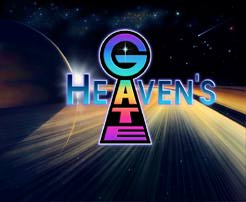
"Healer" is an episode that really feels of its time. Scammers that take advantage of people's religious faith, desire for a cure, or need to belong are as old as time itself. Yet the nineties was a moment when these topics were really in the spotlight. The early part of the decade was awash in scandals involving television evangelists, several of which were revealed as greedy con artists or sexual predators. The decade also brought a renewed awareness of cults, where manipulators like David Koresh or Marshall Applewhite eventually led people in need of answers to their deaths. These ideas were in the air circa 1999 and I suspect they might've influenced Ben Hurst when writing this episode. Titus' gaunt appearance and robed attire resembles Applewhite slightly. His machine produces a rainbow of colors, which reminds me of the rainbow lettering in the Heaven's Gate cult logo

In a very simple way kids could understand, "Healer" attempts to tackle the idea of why people are drawn in by scamming faith healers and cult leaders. Seeing Lady Windermere, her actual mother figure, reduced to a robotic slave reawakens Sonia's trauma. Titus provides the key to resolve this pain, to heal Sonia's psychological wounds by providing an easy cure... In exchange for a sizable donation. This is a message kids actually need to hear: That anyone providing miraculously easy answers to difficult problems probably just wants your money. 


This premise also sets up some good tension between Sonic and his sister, as he remains skeptical the entire time. Hurst manages to pull off that thing he's really good at, where he mines the schism between siblings without making either one into the bad guy. Sonia's need to believe in Titus' magic solutions is so obviously rooted in her pain. Sonic being the skeptic matches his "cool dude with 'tude" persona but it also works another way: He's just worried about his sister falling victim to an obvious hoaxer. (I wish Sonic was this skeptical of the bullshit the Queen and the Oracle puts them through.) 

Unfortunately, because it's a twenty-minute installment in a very dumb cartoon series, "Healer" neither has the time nor the intelligence to explore the emotional ideas in its premise. After a (relatively speaking) decent first fifteen minutes, the episode falls apart in the final minutes. Just as he's about to Roboticize Sonia, the amoral conman Titus has a completely unexplained change of heart. He pushes Sonia out of the way and is then Roboticized himself. It's the sloppiest, most unsatisfactory conclusion to that story that the writers could've thought of, as it goes against everything we know about Titus up to this point. The episode then collapses into totally uninvolving action theatrics, as Sonic and Sonia spin together into a tornado to destroy some airplanes. How and why can Sonia do that? It's lame. 


A completely disappointing ending is all too typical of "Sonic Underground's" brand. Also typical of this show: Uncomfortable weirdness that isn't obviously sexual but feels like it probably secretly is. The show's reoccurring gunge fetish is indulged when Sonic and Sonia emerge from a dumpster, covered in trash and gray slime. Later, Dingo is transformed into a fly and hides in Sonia's hair, leading to a very disturbing close-up of him handing onto giant hair follicles while sitting in a fleshy pink scalp. Also typical of this show: Ugly character designs! Titus is a skinny humanoid with a vaguely animal-like nose who towers over the "Sonic" gang. He kind of looks like a Peter Chung character, which is not a compliment. His partner in crime is another one of the hideous alien creatures we see in the background of this show all the time. 

Thankfully, the "Sonic Underground" music team did not attempt to squeeze this episode's moral about predatory scammers into a sixty second pop ditty. Instead, the obligatory song is "We're the Sonic Underground." The upbeat rock number simply has our heroes stating what they are all about. While no less clumsy than any other of this show's songs – the title is rhymed with "listen to our freedom sound" – at least it's not about friendship or never giving up or some other trite motto. It's a simple mission statement for our characters and that's honestly preferable. While playing the song, Sonic and his siblings kick around large balloons shaped like Robotnik. The song is placed randomly midway through the episode, revealing it as a generic number that was rammed in because it had to be. 


Oh yeah, one more thing: Maurice LaMarche voices Titus, doing a not-bad Rod Serling impersonation while playing him. Because, when this show didn't know what else to do, it let LaMarche impersonate a dead celebrity. "Healer" is one of the better episodes of "Sonic Underground" I've reviewed so far. It tackles some big ideas in an only somewhat half-assed manner. I'd be willing to forgive the rushed ending if this was a different show that wasn't held down by so many bad aesthetic and narrative choices. It's hard for me to forgive "Underground's" overwhelming "Underground"-ness, which means even a halfway decent episode still gets a [5/10].

Monday, September 6, 2021

Sonic Underground, Episode 1.32: Haircraft in Space


Sonic Underground, Episode 1.32: Haircraft in Space
Original Air Date: October 12th, 1999

Before we go any further, I have to ask: Seriously, what the fuck does the title mean? As I mentioned last time, we are officially into "Sonic Underground's" "completely out-of-ideas" stage, which is why this episode revolves around a salon and people getting their hair styled. This explains the "hair" part title but what about the rest of it? It seems to be a pun on the phrase "aircraft in space..." Or, at least, it would be if that was an actual phrase people used. But it's not! It's just a string of words! Moreover, the rest of the episode has nothing to do with aircrafts or space. It's maddening! Is this a mistranslation of a pun that only makes sense in French? What the fuck is happening? 

"What the fuck is happening?" is, in fact, not an unreasonable reaction to this episode at all. To start, royal princess Sonia is getting tired of cohabiting with two teenage boys. She runs off to a salon to be pampered. She is unaware that the robot that runs the salon, named Doo-bot, is a Robotnik spy. She hypnotizes people and then records their confessions. When Sleet and Dingo realize Sonia is in the salon, they attack. Sonia takes Doo-bot, unaware of her powers, back to their secret lair. As soon as Sonic and Manic discover this, they try to return Doo-bot, unaware that their own confessions are already recorded. It becomes a race to get to the machine before Sleet and Dingo do. 


"Haircraft in Space" is the sole "Sonic" related credit of Tracy Berna, a veteran television cartoon writer. She's worked on shows like "House of Mouse," "Timon and Pumba," "Fairly OddParents," "Sam and Max: Freelance Police," and many others. I like some of those cartoons but they're all comedies. Which might explain why Berna's "Underground" episode focuses more on humor than action. And it's not especially good humor. The early scenes, of Sonia being increasingly exasperated by her filthy brothers' antics, are pretty sigh-inducing. A segment in which Sonic attempts to cook a chili dog with a hairdryer really baffles. Moreover, building an entire episode around a robot hairdresser that sounds like the halfway point between Arleen Sorkin and Fran Drescher is not a premise that really lends itself to super fast hedgehog action. 

Most of the humor here is of the unintentional variety. A lot of the plot just doesn't make much sense. Doo-bot's whole purpose is to record people speaking ill of Robotnik, information he can use later against them. When they've got Sonia, one of the regime's most wanted fugitives, under Doo-bot's sway... They attack, giving her a chance to fight back and escape! If Sleet and Dingo had just waited, let Doo-bot record Sonia's vital information, and grabbed it later... That would've been the end of the series. And I realize this is a kids' cartoon and the villains are supposed to be idiots. But when the bad guys are so actively undermining their own schemes, it really breaks immersion. (The attack scene also includes a moment of Sleet being covered with shampoo, because this show can't go a single episode without covering someone in a slimy, viscous fluid.)


Also, there's the issue of the technology here. Doo-bot doesn't record people as they mindlessly gossip with their hairdresser. No, that would've made too much sense. Instead, the machine actively hypnotizes people into a state where they share their secrets. If Robotnik can build a machine capable of doing that, why not use it to hypnotize the masses into being his willing slaves? Mind control of that level would be incredibly valuable to a dictator and this guy uses it to mine petty gossip. 

Additionally, there's some humor in the fact that Doo-bot records... On tape. So much of this episode revolves around tapes! Robotnik can build an advanced A.I. with mind control powers and it records on tapes! Not discs or floppies or Mini-DV, all technology that existed in 1998, but regular ol' cassette tapes. Why not broadcast the information back to Robotnik via radio waves? Radios existed in 1999! I guess Robotnik really loves the warm hum of the cassette format. What a quint and retro futuristic totalitarian state. 


All awkward and dumb writing aside, this episode doesn't work because the audience doesn't care about Doo-bot. She's more annoying than anything else and I do not understand why Sonia is so immediately attached to her. The show also undermines its own moral here. Obviously, the lesson that we should learn is that gossiping is bad. Yet the people under Doo-bot's spell have no control over what they are saying. They are being manipulated into revealing this information. Even Doo-bot is unaware of what she's doing, as her memory is wiped every time her tape is changed. And dissident information in a dictator state is not really comparable to gossip anyway. The moral, in execution, is that "mind control is bad" which is something kids probably don't need to be taught. 

Yet the show runs with this message anyway. The song is "Don't Be a Backstabber" and is explicitly about how no one will like you if you gossip about them. Though the lyrics also include the couplet "Don't be the bearer of bad news/When it comes to your friends, mind your business," a message I'm not entirely sure how to interpret. The music actually isn't too bad. It sounds a bit like some Robert Palmer/Huey Louis-style synth pop... Or rather, the Weird Al version of that style of music. Which is funny, as Tracy Brena worked on the short-lived "The Weird Al Show." Though I genuinely don't know if the episode writers had any influence on the sound or content of the episode's songs. 


More amusing is the music video sequence accompanying the song. For some reason, it depicts Sonic, Sonia, and Manic as either game show hosts or TV pitchmen, I'm not sure which. They snap their fingers and speak directly to the viewer. They wear monster masks, baseball caps, and are chased by ambulatory letters while random numbers float around on-screen. A giant note with the words "You are stupid" on it appears briefly. Making all of this stranger is the in-universe suggestion, just before the song, that Manic is making the entire song up in the spot. Which raises far more questions than I'm willing to ask right now. 

"Haircraft in Space" is another junk episode, though it is bad in a sort of amusing way. Especially when compared to so many episodes that are bad in a merely tedious way. Oh, by the way, the title makes even less sense in different languages. The French title is "Minute de coiffeur" – "Hairdresser minute" – which I'm assuming is some sort of French pun that doesn't work in English. Most of the foreign titles translate as the nonsensical "Hairdresser in space." The Italian title translates as "Coma in Space," which makes even less sense. Only the German title, which translates as "A Hairy Affair," actually works. I never would've guessed that the Germans would be the ones to actually understand what humor is... [4/10]

Friday, September 3, 2021

Sonic Underground, Episode 1.31: Country Crisis


Sonic Underground, Episode 1.31: Country Crisis
Original Air Date: October 11, 1999

Last time, I referenced the "Sonic Underground" writers being completely out of ideas by this point. That continues to hold true with "Country Crisis," even if this was writer Laren Bright's first "Sonic" related credit. After performing an act of domestic terrorism in Robotropolis, Sonic and his siblings come across a note written by their mother. It informs them that Robotnik is building a dam in "Southern Mobius." The local Freedom Fighters could destroy it but are too busy feuding amongst themselves, a tradition that goes back to a visit from the Queen decades earlier. The royal triplets go about trying to patch over this schism and save the day. 
 
Divorced completely from its actual premise, "Country Crisis" has a good idea. More than one group of revolutionaries have been broken up by ideological differences within their own camps. In fact, it almost always happens. The idea of Freedom Fighters getting distracted from their fight against Robotnik, to fight each other, is an intriguing premise. (And one the Archie comic would touch on from time to time.) Sonic teaching an isolated resistance groups that there's more that binds them than separates them could produce a totally solid twenty-minute cartoon, even one with a nice moral. 


But that's not what "Country Crisis" is actually about. Instead, it explores the underwhelming premise of "Sonic, Sonia, and Manic meet the hillbillies." The episode is, obviously, inspired by the legendary backwoods feud between the Hatfields and McCoys. This includes the details of the youngest members of both families secretly falling in love. As many Appalachian stereotypes are touched upon as possible. Overalls, straw hats, mangy beards, shotguns, and bare feet are accounted for. There are numerous references to hoedowns and jugs. "Y'all" and other bits of Southern dialect are abused. The episode stops just shy of including moonshine and incest. As a resident of Appalachia myself, I'd be offended by these portrayals if I wasn't completely numb to seeing them in pop culture by this point. 

It's uninspired backwoods grotesquery and that extends to the character designs. The Valley Folk and Mountain Folk – as they are called even though they all seem to live in the valley – represent yet more unappealing design work from the "Sonic Underground" team. Granny, the leader of the Mountain Folk, has preposterously bad posture. Zeb, leader of the Valley Folk, is a hideous revival of every hillbilly cliché, including protruding teeth and a foot long beard. Jerod, the speedy raccoon type thing, wears bright green pants, a yellow shirt with a giant collar, and red suspenders. Which makes him look more like a New Romantics reject than a redneck. It's all ugly as fuck and is paired with some extremely shaky animation. A scene of Sonic running while holding his guitar makes it seem like his head is detached from his body, while I'm pretty sure the triplets' eyes never move in the first scene. 


Honestly, what insults me the most about this episode is not the reliance on long-since-outdated stereotypes about "mountain folk." Rather, it's the half-assed laziness of the entire script. The primary antagonist of the episode is an enormous robot guarding the dam. That's cool but the machine is never utilized in an interesting way. The episode seems to be building towards the neat visual of the robot smashing through the dam. Instead, the machine accidentally blows up Sleet and Dingo's aircraft and it's up to Manic's drumming to destroy the structure. Lame. Very little imagination was expended on this script. 

This is far from the only questionable writing. The feud between the two clans is based on a gift from the Queen, a medallion split in two, going missing. Each side blames the other for the theft. The actual answer – Granny lost it in her jug and never thought to look there in all this time – is one of the biggest ass-pulls this show has attempted. Moreover, it really says a lot about Queen Alena that she never once stepped in to resolve this conflict herself, even though she's well aware of it and is wandering around Mobius all the time. Instead, she gives orders to her kids to clean up her messes, her children never once asking why this is their responsibility. This is because, I guess, the completed medallion contains a map to some location. What are the odds this show will ever revisit that plot point? What do you think? 


Other than just laziness, why would the writers of a "Sonic" show stick the hedgehog in the very Earthly realm of squabbling hillbillies? Because this is a musical show and bluegrass is one of the genres "Underground" hasn't abused yet. "How You Play the Game" is an embarrassing riff on "Dueling Banjos," between Sonic's guitar and Sonia's keyboard on the banjo setting. It's about as lame as you'd expect, with both singers attempting weak southern accents. It's more forgettable than bad, which really tells you more about this show's standards for badness than anything else. Granny pulls out a washboard throughout the song, which is an instrument not actually associated with bluegrass music but I wouldn't expect the creators of this show to know that. 

Oh yeah, remember when I said kissin' cousins is one of the few Appalachian stereotypes this episode doesn't indulge in? I lied. But it doesn't come in where you'd expect. At the concluding hoedown, Sonia asks Sonic for a dance. Which is only mildly weird, I guess, but becomes way weirder when the hedgehog makes a point to dance with his brother instead. After all, royalty makes more of a habit of fucking their siblings than hillbillies ever did. Anyway, this episode is bad. [4/10]

Wednesday, September 1, 2021

Sonic the Hedgehog (IDW): Issue 43


Sonic the Hedgehog (IDW): Issue 43
Publication Date: September 1st, 2021

One of the various "Sonic" fan corners I hang out in features a person who complains loudly and obnoxiously every time an issue of IDW's "Sonic" comic is delayed. I blocked him a while ago but, before that, I would futilely attempt to explain that delays are common in the comic industry. IDW, in particular, is notorious for missing deadlines. This is the very grown-up and mature perspective I try to take but, I'll admit, IDW's fucked-up release schedule threw me for a loop today. I turned on my PC, ready to review an episode of an old cartoon, when I saw a notification that the new issue of IDW "Sonic" was out today. Issue 43's release date has been shifted so many times I forgot it was actually coming out on September 1st. So I got out of my comfy office chair, grabbed my tablet, booted up Comixology, and here we are now. 


Sorry, each of these recent comic reviews have opened with me complaining what an old man I am. Anyway, issue 43 is devoted to "Zeti Hunt, Part 3." We pick up where we last left off, with Sonic locked in a small room with the entirety of the Deadly Six. The hedgehog brawls with the six Zetis but eventually finds himself overwhelmed by their raw brute strength. Whisper helps out and Tails, with his electronic Zeti stopping devices, eventually arrives to help. Even after beating the monsters into submission, the trouble isn't over. Sonic is informed that Starline has kidnapped Belle. 

Almost this entire issue – as in 19 out of 20 pages – is devoted to the fight between Sonic and the Deadly Six. I like action in my action comics as much as the next guy. Flynn and his team find some novel moments to include in this lengthy brawl. Such as Zaz getting increasingly unhinged as he takes more of a beating from Sonic. Or Zavok picking up Zor, when he refuses to participate in the fight, and literally throwing him at Sonic. Still, there's only so much novelty to watching cartoon characters wail on each other for page after page. I wish there was a little more dramatic meat on this issue's bones. 


In fact, I didn't find myself becoming involved in this issue at all until Sonic started to loose the fight. Sonic is mostly able to handle the big colorful monsters but, after Zavok lands a lucky sucker punch on him, the tide of the fight starts to turn. I've said this before and I'll probably say it again, as it's a fact the "Sonic" franchise has trouble remembering sometimes: Fights are way more compelling when it looks like the hero might actually loose! When Zavok has his hand around Sonic's head, squeezing it like a stress ball, that's a compelling image. The issue needed more stuff like that. 

However, one thing remains consistent no matter how bad of a beating Sonic is taking: He's always a smart-ass. Some people complain about this too and it can definitely drain the dramatic tension from situations sometimes. However, here it is used well, I think. Sonic mocks Zavok's tendency to monologue about his grand, grim purpose by referring to it as failed poetry or rambling. It shows Sonic's tenacity, his unwillingness to give up, that he's still cracking jokes even when getting the shit beat out of him. It is what is commonly referred to as a "personality trait" and it helps enliven a fight-fest issue like this. 


Something else that keeps the pep up in this issue is when Sonic's pals help him out. Tangle goatses a hole in the steel door, whacking any Zeti that wanders by with her tail until Zavok yanks back. Whisper, always so whispery, fires some Wispon bolts into the room before Zavok uses his technopathy to scramble her mask. When Tails drops in, we get a good moment where he saves Sonic's ass by spindashing into Zavok's chest. It's nice to be reminded that Tails isn't just the tech guy but can do all the same special moves as Sonic. Again, brief moments like this add some color to an issue otherwise totally devoted to fisticuffs. (Also, the Chaotix get stuck in traffic and that made laugh while also raising some questions about the infrastructure on Sonic's world.)

In the past, we've seen multiple artist work on a single story, which I frequently suspect is to help lighten the work load of whoever the primary artist was supposed to be. This issue is split evenly between three different artists. And the shift in style is a bit jarring. Jamal Peppers does the first ten pages. I used to love Peppers' work on the Archie series but have been underwhelmed by his contributions to IDW so far. It seems Peppers has dropped the slightly sketchy pencil lines from his work, which always invoked a somewhat gritty feel. Without that, his art comes off as overly smooth and stationary. Or maybe he's just bad at drawing the Zetis. The Deadly Six come off as especially weightless, with wide-eyed and blank facial expressions, on his pages. 


When Bracardi Curry takes over on page eleven, it's really obvious. Curry's art has a fantastic sense of motion. His character work is stylized, and a little more jagged than the traditional "Sonic" artwork, which makes his action sequences even more distinctive. After five pages of excellent art from Curry, Thomas Rothlisberger takes over. After doing impressive work on the 30th Anniversary special and this year's FCBD issue, this is Rothlisberger's debut in the regular series. His talent really lies in facial expressions. Which is probably why panels devoted to Sonic and Tails being defiant while Zavok squishes them, or the clear masochistic pleasure on Zor's face after getting zapped with Tails' gizmo, really shine. It's a good looking book but having three people, each with such distinctive art styles, work on one issue does make for a slightly disorientating read. 

As we reach the end of the "Zeti Hunt" story arc, I do have to wonder what the point of all this was. Did Flynn just want to remind readers the Deadly Sox where still out there, doing zeti shit? Did he bring the colorful monsters back simply to occupy the main cast while setting up the upcoming "Imposter Syndrome" mini-series in the background? That really feels like where this is going but I guess we still have more issue in this arc for it to justify itself. This isn't a totally useless issue and the script does what it can to spruce up a story devoted totally to a fight scene... But it's still just an extended fight scene and only so much can be done with that. [6/10]


Monday, August 30, 2021

Sonic Underground, Episode 1.26: Wedding Bell Blues


Sonic Underground, Episode 1.26: Wedding Bell Blues
Original Air Date: October 4th, 1999

How's this for an episode premise? "Wedding Bell Blues" has Sonic, Sonia, and Manic in Robotropolis for ill-defined reasons when an announcement is broadcast all over the city: Robotnik is going to marry Queen Alena and become king. Even though the triplets realize this is a trap, they decide to sneak into the wedding just in case their mom actually shows up. They talk Bartleby into hiring them as the band. Soon afterwards, they discover that this is, of course, a trap. Robotnik's actual plan has been to adopt Sonia, making her the royal princess and him king somehow. 

We are heading into the last stretch of "Sonic Underground" episodes here – only ten left! – and it's evident that the writers were truly out-of-ideas... Actually, it's worst than that because this was originally intended to be the show's pilot. Nothing about "Wedding Bell Blues" makes any sense. The entire premise of the series is built upon nobody knowing where Queen Alena is. The idea of Robotnik randomly announcing he's marrying her, when her location is perpetually unknown, strains believable. The queen's opening narration assured us that there's nothing Robotnik wants more than to be king. But why? He's already ruler of Mobius. King is just a title at this point. If he wants it that bad, why doesn't he just change the rules and declare himself king? He has all the power!


This is far from the only thing about "Wedding Bell Blues" that makes no sense. At one point, Robotnik says this wedding – that he's only doing as a trap – is bankrupting him. Which really says a lot about Mobotropolis' worth. This seems to be an awkward excuse to bring Bartleby into the plot, as Robotnik squeezes the aristocracy for more funds, and thus get the triplets into the wedding. But there was easily a hundred, less convoluted ways to have our heroes sneak into this event. By the time Robotnik's scheme twists to involve him adopting Sonia, it's apparent that nobody cared if this actually made any sense. 

In fact, the episode is officially uncredited though the Sonic News Network wiki tells me this is a Ben Hurst and Pat Allee joint. If this really was their work, I wonder if they requested their names be taken off it? Because the story gets increasingly nonsensical as it goes along. At one pony, Manic literally stumbles upon a secret passage way. Not long afterwards, Dingo is transformed into a perfect looking chili dog cart – even though none of his other transformations were that good – to lure in Sonic. He's then morphed into a giant fly trap that is seemingly bigger on the inside than the outside, as Sonic is dropped into an endless gullet when swallowed. It all stinks of a writing team that was either hopelessly rushed or simply didn't care anymore. 


With no other options, "Wedding Bell Blues" degrades into crude slapstick. The episode seems to delight in showing us things we don't want to see. There's an extended sequence devoted to Robotnik being squeezed into a girdle, which does not go well for him. Later, Manic dresses in drag and gets throw into a dungeon cell, ostensibly in an attempt to impersonate his mom. Neither of these scenes have any effect on the plot, making you really wonder why they were included at all. At least the moment where Dingo is squeezed into a wedding gown does affect the story... Yet one really has to ask why this cartoon had to feature two separate incidents of crossdressing. 

I was completely numb to this episode's bullshit by the end but that didn't keep the conclusion from really confusing me. Just as Sonia is about to be crowned princess of Mobius, Queen Alena actually does show up. She waves the royal scepter around and assures everyone that she would never abandon her throne... Except she does! She did abandon the throne and that is, in fact, essential to the series' entire premise! Mostly, Queen Alena showing up to confuse everyone before immediately GTFOing again just makes her look like a deadbeat mom. I know, there's a prophecy and all that but the Queen's repeated habit of only showing herself when the plot absolutely insists upon it makes her feel like those one of those dads that only appear on birthdays and holidays. 


Despite clearly being a bad parent who doesn't actually care about her children, the show continues to assure us – via Sonic and company, who remain in awe of Alena – that she's a great person. The episode's song, "When Tomorrow Comes," is all about how much the kids look forward to being reunited with their parent. It's a totally forgettable song, heavy on the na nas and repeating the title. Sonia switches her keyboard to the harpsichord setting, to match the old-timey powdered wigs they are wearing in the scene, but that's about the only thing that sticks out. Lastly, the song's placement in the script really makes no sense. Sonic Underground, in disguise, are booked as the wedding's band. They start to perform... While no one is in the room. They then leave afterwards, to explore the castle. I guess they're trying not to blow their cover but it's definitely among the show's more egregious examples of inserting a song wherever.

Maybe it's just because my allergies medication has me really hungover as I write this review but this is an episode that truly left me annoyed, confused, and stymied. There's definitely been worst episodes of this show but I don't know if there's been one more slapdash in its narrative construction than this one. [3/10]

Friday, August 27, 2021

Sonic Underground, Episode 1.29: New Echidna in Town


Sonic Underground, Episode 1.29: New Echidna in Town
Original Air Date: October 7th, 1999

The final part of the Chaos Emerald Crisis begins with Knuckles reluctantly going to Robotnik for help. The tyrant wants the hedgehogs in return, which Knuckles only agrees to after he promises not to roboticize them. (Also because the fate of the world is hanging in the balance.) Knuckles leads Robotnik to Sonic and his siblings, where the villain immediately goes back on his deal and hauls out the mobile roboticizer. The good guys make a quick escape. Afterwards, Robotnik is still determined to capture the Chaos Emerald, even as it's tearing the world apart. Sleet transforms Dingo into a carrying case but, after placing the emerald shards inside, Dingo is transformed into a giant, rampaging monster. Another brief truce is formed between heroes and villains to stop this new threat. 

"New Echidna in Town" is better than the second part of the Chaos Emerald Crisis but only by a small margin. It's another "Underground" episode with good ideas but no clue how to properly execute them. Knuckles' Archie characterization, as an angsty teen uncertain of his path, is seemingly utilized when Knuckles has to make a deal with Robotnik. He doesn't want to do it, knows it's a bad idea, but doesn't know what else to do. He's upset about betraying his friends but, because his great-granddad said this is the solution, he goes through with it. Instead of mining that angst, and the built-in tension, for all it's worth, the show tosses that plot point away after about five minutes. Robotnik immediately betrays Knux, he fights back and frees his friends, and Sonic and the gang forgive him for backstabbing them. Way to waste an interesting story, Mark Edens. 


After suffering through twenty-nine episodes of “Sonic Underground,” I’ve decided I really don’t like this version of Robotnik. He has ruthless tendencies, yeah, but it’s chained to an annoyingly childish personality. He doesn't agree to work with Kncukles because the world is on the edge of ending... But only because he sees it as a chance to capture the royal triplets. When Dingo turns into a giant monster and starts marching towards Robotropolis, he haughtily doubts Dingo could successfully destroy his grand city. Later, Robotnik just lets Sonic push him in the path of the falling Dingo. The "Underground" Robotnik is as childish and dumb as the "AoStH" version but without the fucked-up backstory to make him interesting. He's a pale imitation of the "SatAM" version – Garry Chalk's performance grows increasingly tiresome – but with a complete misunderstanding of what made that interpretation intimidating. 

As for the decision to turn Dingo into a rampaging kaiju, I have mixed thoughts about it. I don't understand why writer Mark Edens went through the additional hoop of having Dingo transform after Sleet turns him into a box and literally puts the emeralds inside him. After making such a big show of Dingo being electrocuted, which is repeated here, I figured that would be the more reasonable place to begin the transformation. It also bugs me that the threat of the out-of-control chaos energy tearing the planet apart seemingly goes away the minute Dingo turns into a giant monster.


At the same time, I almost admire the philosophy of "if you're gonna go stupid, at least go big." The minute one tiny rock splitting in two caused a global crisis, with seemingly random effects, this three-parter's attempt at seriousness went out the window. So why not turn Dingo into a kaiju? The design is uninspired, as he looks like a generic sludge monster with walrus tusk. But at least it's big and crazy and different. Granted, the show still fucks this up. Monster Dingo is so powerful that he reduces Manic's magic drum set to rubble... Yet he's still defeated by a song – Manic's drum set magically repaired – and the application of some crazy glue. Once again, a good idea paired with a half-assed execution. 

Speaking of that song... I'm pretty numb to the shitty quality of this show's music by this point. "The Mobius Stomp" is, I think, supposed to be a rowdy hard rock number. In actuality, it sounds more like a pale imitation of kitschy dad rock like George Thorogood. I'm still not sure what the musical number was meant to accomplish, as it does very little to actually slow Monster Dingo. What I mostly remember about "The Mobius Stomp" is watching this episode as a kid and thinking the song was painfully bad. That it was an embarrassing attempt at appearing "cool" – Sonic is tippin' shades throughout the performance – and that I was incredibly embarrassed to be watching it. Sad to say, through adult eyes and ears, I doubt this would rank in the top five worst songs on the show. 


Before I wrap up this review, here's some stray observations about this episode. It was hinted at last time and is confirmed here, via blushing cheeks and a tentative hug, that Sonia has a crush on Knuckles. Whether this might've gone anywhere, we don't know as this is Knuckles' last appearance on the show, but at least he's a better love interest than Bartleby. Knuckles also does that thing where he spins his fist into a buzzsaw, which still looks incredibly awkward. There's an extremely forced-in segment involving lava here, which once again proves that cartoons don't know how convection works. Finally, when Robotnik captures the triplets, they get sprayed with a sticky white glue substance. Because just when you think this show's slime fetish is a coincidence, it does it again. 

Oh yeah, the title also makes no fucking sense again. Knuckles is an established character by this point and he doesn't visit any towns. I'm starting to think the episode titles were randomly chosen and the writers had to work with what they were given. Also, Athair just smiles and nods at the end, secure in his wise wisdom, even though I'm absolutely certain nobody could have guessed the random-ass way this all played out. And, like, old man, if you know a giant monster is going to sprout out of nowhere... Fucking warn us. Just say "Hey, a giant monster is going to show up. Be prepared for that." I think that would be a much more useful thing for a mentor to do than bark unassailable commands and drop a series of vague hints. 


Sad to say that this story arc started strong but spectacularly shit the bed in its later parts. Which is not much of a surprise, considering the overall quality of this program. Yet it is a shame that Knuckles finally got to be in an American cartoon, with a personality influenced by the comic books, and it turned out so poorly. Our red spiky boy deserves better than that. [5/10]

Wednesday, August 25, 2021

Sonic Underground, Episode 1.27: No Hedgehog is an Island


Sonic Underground, Episode 1.27: No Hedgehog is an Island
Original Air Date: October 5th, 1999

Once again, I have to talked about the weird way "Sonic Underground" was syndicated. As you've probably noticed, there was a loose continuity across the series, with the occasional element or character reoccurring or being referenced again. All of this stuff was shown in the correct order. Which makes it all the more baffling that "Underground's" two actual three-parters were mixed up throughout the run. The second and third parts of the "Origins" arc was interspersed with the second and third parts of the "Chaos Emerald Crisis" arc. I don't know why the series would do something so confusing – other than to make "Sonic Underground" an even more baffling experience – but, obviously, I'm watching shit in the order that actually makes sense. 

Picking up where we left off last time, Sleet and Dingo flee the sinking Flying Fortress with the Chaos Emerald. Proving there's no honor among thieves, Dingo then steals the emerald from Sleet. All he really achieves is dropping the emerald, shattering it. Breaking the emerald in two unleashes a wave of Chaos Energy around the entire planet, which begins to tear Mobius apart. Knuckles leads Sonic, Sonia, and Manic to his great-grandfather Athair, in hopes he'll have some answers. (Sleet, who promises to never betray Robotnik again if he retrieves the emeralds, is on their tails.) And Athair's answer is to team-up with Robotnik. 


The first part of the Chaos Emerald Crisis story worked because it was focused. There was a clear, defined threat – a giant floating war machine – and an easily understood way to stop it: Grab the Emerald. It was a logical way to bring Knuckles into the story and the last minute twist, of Sleet and Dingo's betrayal, added a compelling wrinkle. "No Hedgehog is an Island," unfortunately, did not take that lesson to heart. This is an episode with too much stuff happening. Sonic is separated from Knuckles and his siblings, for no meaningful reason, for most of the story. Sleet and Dingo's story splinters as well. Mostly, this episode's threat has no clear definition. When the emerald – one single, small emerald – is shattered, it causes all sorts of crazy shit to happen. Huge cracks open in the earth and then close. A tornado of green energy appears. Green light shoots out of the ground all over the world, sometimes causing trees to comically shoot into the air. The effects are truly random and that leaves us with a story without much focus. And what's better than a random solution to a random problem, such as when Manic transforms the aforementioned tornado into fireworks via the power of a bitchin' drum solo? Let's see Neil Peart do that. 

I also applauded the last episode for making Robotnik a creditable villain and for allowing Sleet and Dingo to show some competence. That goes right out the window in this episode. As the Flying Fortress falls, Robotnik throws a childish temper tantrum. Later, he pouts petulantly in his base, his master plan ruined. Further on, he allows Sleet to work for him again. Robotnik is supposedly ruthless but the fact that he keeps hiring this guy, despite his repeated failures and now a genuine insurrection, doesn't reflect well on Mobius' tyrant. Dingo betraying Sleet is a surprising moment but long overdue, considering the constant abuse the big orange guy puts up with. Yet that intrigue is immediately dropped by Dingo's incompetence causing an apocalyptic crisis, which is at least in-character. In short, after a decent half-hour of being effective villains, the bad guys go right back to being jokes. 


This episode gives Athair more of a role and, as I expected, he's another evasive mentor character. Knuckles goes to him for answers. He gives him a special urn that can safely hold the Chaos Emeralds, tells him to team up with Robotnik to save the world, and then refuses to elaborate further. There's potentially good reasons to form an alliance with Robotnik, as he has a whole planet's worth of resources at his disposal. But telling someone to work with the mad dictator who just tried to carpet bomb the entire planet earlier in the day, probably requires a little more information. Not on this show, where old wise dudes in robes are never to be doubted and can never be expected to give a straight fucking answer. 

Even though the plot has our heroes facing down a global apocalypse, we still have to make room for a song. And, boy, is it out-of-place this time. Wild Chaos Energy is literally tearing the planet apart, which has got Knuckles feeling understandably overwhelmed. Sonic, Sonia, and Manic launch into a punk song called "Learn to Overcome," which really does not feel like the best use of their time in this situation. As for the song itself, the built-in roughness allows me to forgive the questionable lyrics. At least there are loud guitars and drums, even if the "na na na nas" they throw in feel more like a pop thing than a punk thing. The music video sequence features Sonic, Sonia, and Manic with mohawks and facial piercings as well as scenes of them posing in a boxing ring. Which is pretty funny. 


Another thing holding this episode back is some not-too-grand animation. The scene where Sonia is trapped into a huge crack in the ground, nearly crushed by the fluctuating walls, is undermined by some serious off-model moments. Sonia's size shifts throughout the scene while her boobs swell to balloon proportions during one close-up. Later, when Dingo picks up the emerald shards and tries to force them back together, his skeleton starts to flash through his skin. This is lingered on, in repetitive fashion, for several seconds. Since we never see Dingo in this episode after that scene, it really makes it look like he died. Also, Knuckles is not consistently portrayed here. The shape of his face and size of his dreads and hands change several times. The tougher-than-leather echidna sure looks like an adorable puppy dog numerous times throughout this episode. 

Also, the title makes no goddamn sense. Knuckles is the conflicted character in this episode, not the triplets. They all have each other's backs. If the title is just a shitty pun, it also makes no sense, as the Floating Island does not appear in this twenty-one minutes. In other words, after a pretty decent start, the Chaos Emerald Crisis returns to the level of quality we expect from this cartoon. Fishes gotta swim, birds gotta fly, and "Underground's" gotta suck. Oh well. Maybe it'll end strong? [4/10]