Saturday, October 12, 2019

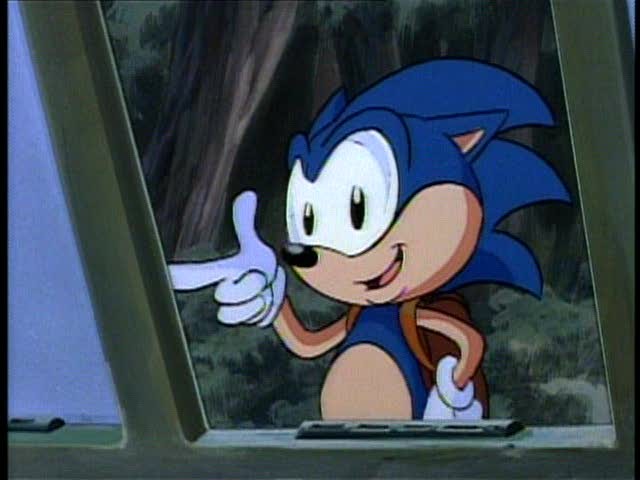
Sonic the Hedgehog (1993), Episode 1.03: Ultra Sonic


Sonic the Hedgehog (1993), Episode 1.03: Ultra Sonic
Original Air Date: October 2nd, 1993

The third proper episode of “SatAM,” which has another non-indicative title, comes from the pen of David Villaire. A veteran cartoon writer, Villaire largely worked on “The Smurfs,” Hanna-Barbara's “Godzilla” cartoon, whatever the fuck “Dinky Dog” is, and assorted garbage like “The Gary Coleman Show” and the “Happy Days” cartoons. “Ultra Sonic” is only one of two “Sonic” episodes Villaire would write. Despite his relatively brief involvement with Sega's blue hedgehog, his contribution to series' lore was significant.

Ya see, “Ultra Sonic” would be the proper introduction of Uncle Chuck. Sonic and Sally once again travel into Robotropolis, this time to sabotage Robotnik's latest roboticizer. After the slightly botched mission, they meet up with the other Freedom Fighters. That's when Sonic catches sight of his Uncle Chuck, now a hostile robot slave. One touch of a magical Power Ring is enough to restore Charles' free will. He leads the team into the tunnels under the city, where Robotnik is using a giant robot dinosaur to mine for powerful crystals. Yet the Power Rings effects are only temporary, meaning Uncle Chuck is left as a mindless robot by the mission's end.


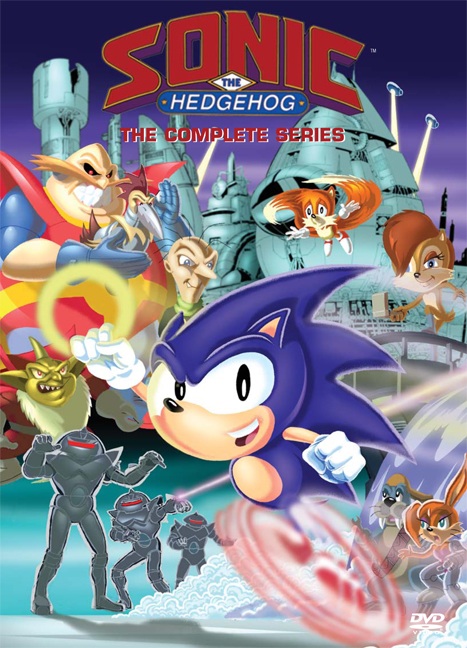
As a kid, I remember almost every episode of “SatAM” beginning with Sonic and Sally sneaking into Robotropolis to fuck-up a new factory or invention of Robotnik's. Three episodes in and that recollection is holding true. “Ultra Sonic” begins with a somewhat off-balanced sequence. Sonic and Sally's interaction in the beginning is bitchier and pettier than usual. Sonic seems more vain than usual, actually admiring himself in a mirror. After the two's location is given away, Snively attempts to flush them out with fire extinguishing foam, an odd move. This leads to a weirdly tension free air chase, with Sonic and Sally dangling off a flying platform.

That's just the beginning though because, once Sonic and Sally meet up with the other Freedom Fighters, “Ultra Sonic” becomes pretty damn good. This is the first time in the series we've actually seen the Freedom Fighters working as a team and, holy shit, it is satisfying. Everyone slots into their traditional roles. Bunnie is sweet but uses her super-strength multiple times. Rotor is the tech expert, helping the gang operate one of Robotnik's underground trains. Sonic is the brash action hero, Sally the observant leader, and Antoine the goofy comic relief. I mean, shit, I even found the joke about Antoine mixing up the phrase “piece of cake” with another desert to be pretty funny. Watching the Freedom Fighters working together to undo one of Robotnik's plots always leaves me smiling.


Though he was referenced in the pilot, “Ultra Sonic” let's us finally meet Uncle Chuck. And he makes a pretty great first impression. Upon having his original personality restored, Sonic's uncle comes across as an extremely cool old guy. He happily leaps down an elevator shaft, sliding down on the ropes, prompting Sonic to point out how damn neat his uncle is. Later, he climbs into the mouth of a damn robot dinosaur, leading the way. This is a character so determined that he doesn't pause to get too sentimental after having his free will restored, instead focusing on the mission that needs to be done.

Uncle Chuck is brought to life by William Windom, a character actor with only a few other animation credits that had been appearing on television and in film since the forties. Windom's voice is wizened and nicely raspy,  suggesting an almost archetypal cool older dude.


What makes Uncle Chuck's presence even more meaningful is the emotions his condition brings to the story. There's no big flashing lights when the Power Ring works its magic on Chuck. Instead, he holds the ring and simply has his personality restored. He hugs Sonic, so thankful to see his nephew again, the robot actually crying. How a robot cries isn't a question worth asking, because the moment is so damn sweet. After the Ring's magic wears off, as he struggles to hold onto his soul as Robotnik's cruel programming starts to take hold again, Sonic is deeply wounded. He actually cries – Sonic fucking cries, in clear violation of Sega's yet-to-be-enforced mandates – because he came so close to getting his beloved uncle back, just to loose him again.

The only way the other Freedom Fighters can console him is to promise they'll get Uncle Chuck back. Rotor notes that they'll get all their families back, suggesting all of the Freedom Fighters might have loved ones stolen away by Robotnik's roboticization process. In other words: Everyone on this team has dealt with these feelings of lost, these feelings of pain, of helplessness. Which is pretty fucking powerful for a cheesy kids cartoon made to sell a video game.


As good as “Ultra Sonic” is, it certainly doesn't make you forget its a somewhat cheaply produced cartoon. The animation gets a bit choppy a time. A fight scene between the Freedom Fighters and a robot – which, coincidentally, somewhat resembles E-102 Gamma nearly a decade before he was created – is very awkwardly assembled. The episode opens with an unintentionally hilarious moment of Sonic and Sally running through a hallway, the audio of them gasping for breath in a rhythmic matter playing on a loop... Which can't help but come off as rather suggestive. And pairs amusingly enough with some very strangely animated shots of Sonic and Sally crawling through the air vents, the hedgehog's ass looking huge for no reason.

The writing is kind of weird at times too. The giant robot that is moving the crystal is interchangeably referred to as both the Dinobot and the T-Bot, as if someone realized, halfway through production of the episode, that Hasbro might sue them for using the phrase “Dinobot.” What exactly this giant energy crystal Robotnik plans to exploit does is never truly explained either. We are left to assume that, much like the Power Rings, it has magical properties of its own. I guess its possible the show creators might've been inspired by the video games' Chaos Emeralds? After all, those plot devices have been present since the very first game.


So despite some pretty serious flaws, “Ultra Sonic” is an episode that really displays what made “SatAM” such a special show. Outside of “Batman: The Animated Series,” was there any other kids cartoon on the air in the early nineties that made its hero look so vulnerable, that acknowledge so openly that the good guys don't win in every way, all the time? And from a show about a blue fucking hedgehog that runs fast. Amazing. [8/10]

Wednesday, October 9, 2019

Sonic the Hedgehog (1993), Episode 1.02: Sonic and Sally


Sonic the Hedgehog (1993), Episode 1.02: Sonic and Sally
Original Air Date: September 25th, 1993

Even though the first episode-to-air of “Sonic the Hedgehog” probably could've been entitled “Sonic and Sally,” the powers-that-be saw fit to bestow that particular title upon the series' second proper episode. “Sonic and Sally” begins with the titular duo, as well as Bunnie, about to destroy Robotnik's SWATBot factory with a series of explosive canisters. Just before completing the mission, Sally is captured. Robotnik's latest plan involves sending a robotic duplicate of Sally back to Knothole Village in the princess' place. Though Sonic and the others notice Sally acting a little odd, they assume she's just shaken up from being captured... Only Tails truly realizes Sally is rather literally not herself.

Since this was only the second episode of “SatAM” to air back in 1993, “Sonic and Sally” was viewer's proper introductions to a number of characters and concepts. This is the first time we really see Bunnie. The inexplicably Southern cyborg rabbit is introduced as part of the gang, the origin of her strength-granting cybernetics never being expounded upon. (And, as far as the cartoon goes, they never would be.) After she returns to Knothole, she even has her robot arm fall right off. Which seems like a rather flippant way of treating the character's particular condition after seeing how the comic made it a constant source of angst for nearly twenty-five years. Still, Bunnie comes off as less snarky and more lovable here than she did in the pilot, which is nice. She even gets the briefest of ship-teases with Antoine, as he helps her out of the straw-pile and the two smile at each other. It's entirely possible that wasn't even intended as a ship-tease.


This episode was also basically the introduction of Rotor, who is only vaguely set-up as the team mechanic here. You could even say its Tails' first appearance, as he was absent in “Sonic Boom.” The little-brother/big-brother relationship he has with Sonic is given a prominent role here, as Sonic and his younger fox friend have a cutely paternal talk on a bridge in Knothole about Sally's condition. I think it's kind of adorable the way Sonic describes it as “guy talk.”

Bunnie's robot parts aren't given an origin but, funny enough, the Power Rings are. This episode also introduces the Lake of Rings, though the exact reason why this body of water coughs up a magical ring once a day isn't elaborated upon. (Fortunately, this episode doesn't use the Rings as a problem-resolving plot device like last time, though Sonic still uses one to get out of a jam.) On the more villainous end, “Sonic and Sally” is also the first time Roboticization really becomes a threat, as Robotnik plans to inflict that particular fate on the captured Sally. I definitely do find it odd – and oddly amusing – the elements of the show's premise the cartoon felt the need to expand on and the stuff it just never really justified. I guess that's what the expositionary opening theme song is for.


But I'm not really talking about “Sonic and Sally” as an episode right now, am I? Probably because it's not an especially good one. This was first episode of “Sonic” written by Ben Hurst. While Hurst would become a beloved figure in the fan community for talking with us and never letting go of the torch he held for “SatAM,” “Sonic and Sally” is not the strongest debut for the writer. There's quite a few convoluted story turns here. When Robotnik has Sally – keep in mind, the leader of the rebellion he's been trying to crush for a while now – captured, he doesn't immediately kill her or roboticize her. Instead, he waits at least a few hours before even trying. In general, the actual flesh-and-blood Sally is largely sidelined in this episode, being reduced to a damsel in distress essentially.

The point of the robotic Sally copy is to find the location of Knothole, which apparently it has to do via video recording, because I guess GPS wasn't something sci-fi writers could even conceive of in 1993. Knothole's fate is saved when a random malfunction disables the robot's broadcast, saving the resistance's collective ass. I kept waiting for the episode to justify this as a deliberate act by the still emerging Uncle Chuck. And maybe it does later. But, right now, it comes off as the sloppiest of deus ex machinas. And the robot isn't a very good spy, as it starts shooting lasers pretty much the moment its discovered.


But don't get the wrong impression. Even for its obvious flaws, I still really like “Sonic and Sally.” The idea of Tails, the kid, noticing something is wrong before anyone else does and his suspicions not being taken seriously initially... That's a classic premise and one I enjoy seeing played out here. There's definitely something satisfying about seeing Tails pick up on little details – Sally not performing a “Funny kiss” correctly or flatly reading a bed time story – just for Sonic to similarly realize something is up when the Robo-Sal fails to perform a secret handshake correctly. The scene of Tails catching Sally casting an eerie red glow from her eyes after he's tucked into bed has that feel of a classic nightmare to it, being one of those images that really stuck in my mind throughout the years.

That is not the only elemental moment in “Sonic and Sally” that clung to my brain for years afterwards. The early sequence of Sonic infiltrating the SWATBot factory, of nearly being pushed into a “Terminator 2”-style vat of molten scrap along with a pile of falling trash, really made an impression on me as a kid. I can vividly recall incorporating that idea into more than one playtime fan fiction I conceived of as a little boy. The entire opening sequence is surprisingly tense, devoted to all of the characters nearly be captured and outrunning a soon-to-detonate bomb. And even if the character isn't treated the best here, Kath Soucie's performance as Sally remains fucking incredible. The amount of subtly and personality she's able to incorporate into the simplest of line-reading is impressive. For years, I thought Jim Cumming's Robotnik was the best “SatAM” performance – and he is great here, amazingly sinister – but I'm increasingly realizing Soucie's grasp on her character was far greater.


Also, the first thing Robo-Sally does to Sonic is give him a great big kiss, which is the Saturday morning cartoon equivalent of getting laid. Some of y'all criticize Archie for focusing so much on romance but Sonic and Sally's romance was always a huge part of the original cartoon. (Also, the comic would repeatedly revisit the idea of Sally being replaced with an identical robot, making this episode actually pretty influential among “Sonic” media.) Though not the best episode, “Sonic and Sally” is still kind of iconic among “SatAM's” brief run. [7/10]

Monday, October 7, 2019

Sonic the Hedgehog (1993), Episode 1.01: Sonic Boom


Sonic the Hedgehog (1993), Episode 1.01: Sonic Boom
Original Air Date: September 18th, 1993

The first proper episode of “SatAM” has the kind of set-up that would carry most of the series. Sonic, Sally, Antoine, and an elderly Freedom Fighter named Cat have sneaked into Robotropolis with the goal of sabotaging Robotnik's new series of StealthBots, heavily armed airborne drones that are presumably immune to radar. Along the way, Sally uncovers what she believes to be a message from her missing father. Cat is captured in the subsequent escape. Sonic stays behind to try and rescue their friend, while Sally and Antoine venture forth to the Dark Swamp, into the bowels of the dilapidated Black Gate Prison, in hopes of finding her dad.

Since this is essentially the first episode of “Sonic the Hedgehog,” you would expect “Sonic Boom” to establish the characters and story. Surprisingly, it doesn't concern itself with that much, not even introducing all the main characters and leaving elements of the plot untouched for now. Instead, “Sonic Boom” is more about establishing the mood that differentiated “SatAM” from many other Saturday morning cartoons of the time.


The episode begins with an all-timer of a sequence, that is largely without dialogue. We have a series of information schematics, which dissolves to the a shot of the snail-like spy drone passing over Robotropolis, showing the new audience how miserable and industrial this city is. We see our quartet of heroes sneaking around the airlocker, heavily patrolled by large robots. They hide in an air duct while one of those robots look inside, searching around with a flashlight. Sonic and Antoine are shown tensing up. These characters are scared, knowing their lives are at risk and they will be over if they are caught.

The moodiness of that opening sequence is carried throughout the rest of the episode. Look at the scenes of Sally and Antoine wading through the swamp, which is foggy and steaming. As they dive into the grimy prison, the viewer starts to feel a sense of genuinely spooky unease. Wind blows throughout the empty building, even slamming a door shut. It's ominous. Heavy. Just from the way the story is handled, it's obvious that this “Sonic” takes its characters, their feelings, and their world seriously.


In fact, you could almost mistake “SatAM” for a piece of eighties cyberpunk if it wasn't for a few obvious elements. Of course, this is an American cartoon and has that general soft look to it that Japanese animation generally lacks. And it obviously doesn't look as good as “Bubblegum Crisis” or whatever. While the animation isn't bad – the backgrounds look great, the character designs are good if very cute – there are a few animation mistakes. When running, Sonic's limbs disappear sometimes in weird ways. There's a few overly static images of the SteathBots that are kind of odd. Still, this looks about as good as you could expect a DiC show from 1993 to look.

And the action scenes are pretty good too. Sonic sneaking back into the city to rescue Cat includes a cool spot of him running up an elevator shaft and spin-dashing through a door. (Notably, Sonic is also clearly scared when the SWATBots start shooting at him. Keep in mind that the modern Sega demands that Sonic never show any intense distress.) The scene of him outrunning a StealthBot and redirecting its missile is fine.


The clear highlight of the episode is when Sonic and friends are cornered by a snarling monster in what is clearly the prison's sewer. (It's a wet and stinking underground tunnel, full of brown stuff. They don't say that's shit but it definitely is.) Sonic quickly deduces that the beast is a robot and just runs right through, tearing it apart from the inside out. While it's definitely a cool moment, it also represents one of the more contrived moments of the show. Sally hands Sonic a Power Ring, which is what gives him the boost needed to slay the beast. This is not the last time “SatAM” would resolve a situation just by handing Sonic a Power Ring.

Also, I can't help but notice the obvious “Star Wars” influence in this episode. Robotnik's introduction – sitting in a large and swiveling mechanic chair – obviously brings Darth Vader's first appearance in “The Empire Strikes Back” to mind. Sonic and friends getting dropped into a pit to fight a snarling monster is clearly inspired by Luke fighting the Rancor in “Return of the Jedi.” The show also includes a number of wipe transitions, another thing it has in common with George Lucas' series. I was never into “Star Wars” into a kid and, as I've gotten older, it's increasingly clear that is because “SatAM” showed me so much cool shit from that series first.


Anyway, because “Sonic Boom” is basically the first episode of the series, it brings us another round of character establishing moments. While Sally hacks into the StealthBots' computers, Sonic shows his impatience. He shows that impatience all throughout the episode because, you see, guys, he's all about going fast and being snarky. The Sonic/Sally/Antoine love triangle is establish when she chooses to go off into the swamp with Antoine, Sonic clearly being jealous of her flirtatious actions. Robotnik threatens to torture Cat if he doesn't give him the location of Knothole, telling us a lot about the villains' personality quickly enough.

While “Sonic Boom” goes out of its way to depict Antoine as the goofy comic relief, it's not all pratfalls. Granted, there are a lot of pratfalls. Cat tells him to relax, he misunderstands, lean on a grate, and exposes himself to the bad guys. Later, he gets scared in the swamp and leaps into a tree, while pretending to be brave for Sally. Yet, as ridiculous a character as Antione is, he gets a fair moment too. While Sally and Antoine are crossing an extremely rickety bridge, both of them start to slowly freak out. Instead of immediately fleeing to safety, Antoine stays by Sally's side to help her cross. See? He's braver than he seems.


And let's talk about Sally, because she's really the stand-out cast member of this episode. From the moment she appears on-screen, there's something striking about her. Compared to the more youthful sounding performance in the pilot, Kath Soucie's performance sounds more mature and intellectual here. Sally is utterly determined here. When she gets a sign that her father might still be out there, she will not be dissuade from finding him. She is absolutely determined and stunningly strong-willed, bossing around Sonic and Antoine without ever faltering. Yet she's vulnerable too. Finding a tattered remain of her father's cloak almost sends her into tears. It's no wonder the character would turn a whole generation of dudes into furries. (Though her character design, with its perpetually curved back that emphasizes her butt and chest, probably has something to do with that too.) She's immediately fascinating.

In various interviews, “SatAM” writer Ben Hurst would say the show's writer always tried to stick to a specific idea. Hurst didn't write this episode, Len Janson did, but the statement still fits: The characters will have wins but there will always be losses too. Sonic and friends have plenty of victories in this episode. They successfully sabotage the Stealth Bots, destroying them and infuriating Robotnik's base. Sally doesn't find her dad but she does uncover a complete map of Robotropolis. Yet the characters also lose Cat. When Sonic heads back to rescue his friend, he's gone. That's right, kids. “SatAM” essentially killed off a character in its very first episode. That's a pretty bold opening statement for a kid's show.


In other words: “Sonic Boom” is an excellent first episode. The characters are immediately lovable, the world drawls you in, and the script is surprisingly complex in some ways. I definitely recall watching this episode when it first aired as a kid, which should tell you the impact it had on me considering that was twenty-six years ago. [9/10]

Friday, October 4, 2019

Sonic the Hedgehog (1993), Episode 1.13: Heads or Tails


Sonic the Hedgehog (1993), Episode 1.13: Heads or Tails
Original Air Date: December 11th, 1993

Before we can talk about “SatAM,” we really have to talk about “SatAM's” opening sequence and theme song. The background events that set up the series' plot was never truly depicted in the show, leaving it to the intro at the start of every episode to establish the premise. So we see the golden city of Mobotropolis, in all its gilded age glory, fall in the span of a single dissolve to Robotnik and be transformed into a bleak, dystopian nightmare. We see Sonic and the Freedom Fighters sneaking around the city, sabotaging it with their limited resources. There's even a pick at the Robians, the normal animal friends of Sonic that have been turned into heartless robots. (Though the intro sort of makes the Robians look like giants too, a misconception that confused my childhood brain.) Sonic is shown to be fast and totally tubular, Sally is capable and tough. And they have a teasingly quasi-romantic relationship. While I've never been entirely sure what the duo was doing in this opening – I guess busting open a nuclear reactor and flooding Robotropolis with the radiated water, destroying his power source? Or something – the intro has always fascinated me.

And, of course, that theme song is fuckin' boss. The heavy metal wail of “He's the fastest thing allllivvvveeee!!!” will forever echo in my memory, even if the kitchsy synth riffs of the music doesn't exactly rock as hard as the vocals.


Before we go any further, let's talk about what “Heads or Tails” is about. The plot starts out simple enough. Sonic and Tails are sent into Robotnik's base to retrieve the cotter pins needed so the Freedom Fighters can complete their new catapults, the defense against Robotnik's swarm of airborne Buzz-Bombers. (An element taken from the games and heavily featured in the comics that would never appear in “SatAM” again.) Along the way, Sonic and Tails uncover a plot by Robotnik to destroy the Great Forest so he can locate Knothole, capture the Freedom Fighters, and take the Power Rings for himself. It can get surprisingly plotty at times for the first episode of a kids' cartoon.

I'll be starting my “SatAM” retrospective off with “Heads or Tails,” the series pilot. In the first of several ass backwards moves ABC would make during “SatAM's” short life, the network decided to air the pilot at the end of the first season, instead of the beginning. (That's why it says 1.13 at the top there.) In retrospect, however, this actually wasn't such a bad idea. The pilot is different in several important ways from the series that would spawn from it. The animation style is stretchier, bouncier, and overall goofier than what would follow. Some of the character and mechanical designs are obviously different. Robotnik's spy drone has a much cooler floating eyeball design than what they ended up going with. The various hovercrafts are all a bit different. Instead of Nicole, Sally operates a large, yellow computer on wheels. Most prominently, this is where the infamous “Pink Sally” design that was featured in the early comics came from, before the more traditional redhead-and-vest design that would come into use. But you guys already knew that.


“Heads or Tails” color palette is a little brighter, matching a tone that is a bit more cartoony and comedic than what would follow. There are a lot of slapstick moments here. Such as Snively being mocked by laughing SWATBots or beaten up by his frustrated uncle, a sequence unlikely to be played for laughs today. The Buzz Bombers, the main robotic antagonists throughout the pilot, are treated as largely comedic foils, frequently abused and beleaguered peons to a bad boss. Sonic plays with a bendy electric guitar, Bunnie wears a face-mask and curlers to bed (a possible reference to the character's initial desire to become a hairdresser, perhaps?), Rotor is always scarfing fish. While the series that followed was in no way free of stuff like this, the pilot is a bit heavier on it.

Yet in many important ways, “Heads or Tails” sets up and establishes what would make “SatAM” so beloved. The pilot episode begins with a number of establishing character moments, giving the viewer a general idea of who these characters are as quickly as possible. Robotnik is introduced flying into his smog-choked city and loving it. He dodders on his robotic bird pet but abuses the only actual person around him. He's also obsessed with Sonic, who mocks his carefully built empire. Snively is introduced trying to slick his few hairs back, obviously someone who wants to be seen as powerful and cool but is totally unable to do so. He clearly is both terrified and resentful of Robotnik.


Sonic's establishing scene, meanwhile, has him shredding on an electric guitar because he is, you see, an aggressively cool dude with attitude. (He also casually references Axl Rose, so try and figure out how that makes any sense.) Notably, he's doing this in hopes of impressing Princess Sally. The princess, meanwhile, does not like to be referred as a princess, showing she's a leader more devoted to her people's freedom than her own opulence. She bickers comically with Sonic throughout, the belligerent sexual tension already being obvious. Rotor is a soft-spoken and slightly goofy engineer. Bunnie is a super-strong Southern sweetheart with a slight sarcastic edge. Antoine is full of himself, cluelessly pinning for Sally, and often mocked by Sonic. The point is, the characters wouldn't change too much beyond this point. The pilot does exactly what it's suppose to: Introduce kids to a cast of characters and their world.

What's most compelling about “Heads or Tails” is, in fact, that world. The characters aren't much more than archetypes at this point, albeit lovable ones. Sonic and Sally's banter is pretty funny and cute, as is the hedgehog's general over-the-top 'tude. Yet it's easy to see why this world pulled me in as a kid. The blasted-out junkyard look of Robotnik's city – not yet named Robotropolis – wasn't like much else on Saturday morning in 1993. More importantly, even in the pilot, “SatAM” was already committed to the premise that the heroes would always suffer losses. While in the city, Sonic and Tails stumble upon Muttski, Sonic's dog that has been roboticized by Robotnik. While he briefly makes it through to his old friend, Sonic ultimately has to give up for the day. There's even a rather touching scene where Sonic and Tails look at a photo of the hedgehog with Uncle Chuck – referenced but unseen in this episode – and think back bitter-sweetly to happier times.

In other words, even in an episode that is goofier than most, “SatAM” had characters with deeper emotional lives and longer histories than you'd probably expect from a cartoon show made to advertise a video game.


As the title suggest, a large part of “Heads or Tails” is devoted to Sonic and Tails' relationship. And that, in actuality, might be the weakest thing about about the pilot. Tails is introduced picking flowers for Princess Sally, establishing him as a total innocent. While most subsequent “Sonic” media have depicted the hedgehog and the fox as best friends, true bros, the earlier adaptations of “Sonic” took a slightly different approach. Sonic is rather explicitly a big brother figure to the childish Tails. He teases him playfully before they go on a ride down the the secret slide into Knothole. (An element similar to the early Archie comics.)

However, it's all undermined a bit by Tails being kind of annoying. While sneaking into Robotnik's base, Tails whines about needing to go to the bathroom. The fox then gives away their position by sneezing. At the very end of the episode, Tails screams for Sonic to come rescue him when being chased by a Buzz Bomber. No wonder I was so ambivalent to this character for so long. It's like writer Len Janson – who had been writing kids television since the sixties and was probably best known for extensive work on “The Smurfs” and “The Real Ghostbusters” – wanted Tails to be some sort of audience surrogate character... Which is weird, since Sonic is the character we all wanted to be and are ostensibly here to see anyway.


And while there's much to admire in “Heads or Tails,” this is still a network cartoon show from the early nineties. Certain limitations are unavoidable. While the character designs are likable and the painted backgrounds are nice to look at, the animation budget was clearly not above and beyond DiC's usual standards. When Robotnik is watching Sonic race after a Buzz Bomber, the show goes weirdly silent for a minute. During the post-victory celebration, the background citizens of Knothole – which includes likely inspiration for Archie's Hamlin, by the way – the animation cycles cheaply for a second. Befitting the writing quality of the time and place, it also seems “Heads or Tails” was trying to partially educate its audience.  I don't think I have ever heard the term “cotter pin” this much before or since.

Going along with this possible desire to educate kids and the ideas that were floating around in the world at the time, “SatAM's” environmental message is established right from the first episode. During Sally's personality-defining moment, she makes sure to point out Mother Nature is the number one monarch around here. Robotnik's love of pollution and industrial overgrowth is exactly the kind of thing you'd expect a “Captain Planet” villain to say or do. Robotnik's plan, after all, involves completely stripping away a forest by killing all its trees. It was 1993. The Soviet Union was gone and America didn't have any other endless wars to fight at the time. Suddenly, for a few years, we were obsessed with giving a hoot and saving the rain forest. “SatAM” followed that lead, picking up on the subtext already apparent in the original Sega games and running with it.


Stepping back from all of that, a big reason “SatAM” would grab such a loving fanbase is because it was, over all, a well produced show. The soundtrack, which purposely invokes Alan Silvestri's “Back to the Future” and John Williams' “Star Wars” scores,” is still pretty good for a Saturday morning cartoon show. The voice cast is solid all around. Jaleel White's nasal whine was an odd pick for Sonic but he attacks the goofy dialogue with gusto. Christine Cavanaugh's Bunnie is soft and sisterly but funny. Kath Soucie already inhabits Sally with a fantastic liveliness and complexity. Charlie Adler and Bardley Pierce, as Snively and Tails, both sound exactly like what you'd expect a villainous toadie and an annoying little brother to sound like. Rob Paulsen's goofy French accent as Antoine isn't great but fits what is a silly comic relief character. Best of all is Jim Cummings as Robotnik, whose pure malevolent glee and unhinged screaming is so intense at times, I can picture it easily frightening younger children.

So despite some flaws and quite a few variations from what the show would become, “Heads or Tails” is still a pretty decent pilot. It sets up the characters, their world, and their conflict in compelling ways. I'm sure “SatAM” would have gotten the exact same reception if this episode had aired first, though it's probably for the best that something a little more representative of the rest of the season was sent out in front instead. [7/10]

Wednesday, October 2, 2019

Sonic the Hedgehog (1993) Reviews: Introduction


More or less my entire life, I have been a fan of “Sonic the Hedgehog.” A big factor in keeping my interest in the series alive was Archie's comic books. When the quality of Sega's video games became more and more sloppy, when the entire series began to be treated as a cruel joke by the internet, the inexplicable emotional attachment I had to this little blue hedgehog would go on due to Archie's seemingly undying comic book.

Of course, the comic book is not where our story starts.

As I've explored before, I don't actually remember how I first became interested in “Sonic the Hedgehog.” The easiest answer I have is that it was the early nineties, I was a little kid, and the Sega Genesis and its flagship character were the hottest, coolest thing at the time. Whatever the origin point for my obsession was, the Saturday morning cartoon show version of “Sonic” was absolutely what stoked the flames to such an intensity that they have burned, to various degrees of strength, my entire life.


What makes this even stranger is, if you disregard the two-and-a-half decades long comic book it spawned (which many fans indeed do), “SatAM's” impact on the “Sonic the Hedgehog” franchise seems fairly minor. In its original air time, the show ran only for two brief seasons, beginning in September of 1993 and ending by December of 1994. Aired on ABC's short-lived Saturday morning cartoon block, the show faced stiff competition from Fox's “Mighty Morphin' Power Rangers” juggernaut and was, in many areas, pre-empted all together by local newscast. The show often faced challenges from network executives and its schedule was often shifted around, many of the first season episodes being aired in back-to-back chunks.

Knowing all this, it's surprising “SatAM” managed to survive even as long as it did. The show, in fact, almost didn't come into existence at all. In the early nineties, Sega of America commissioned DiC Entertainment – the American/Luxembourgian purveyors of cheap but kind-of-beloved kids cartoons, including previous video game adaptations like “The Super Mario Bros. Super Show” and “Captain N: The Game Master” – to produce a “Sonic” cartoon. The company initially presented Sega and ABC with a farcical comedy series based on the property. This was rejected by ABC, who demanded something darker and more serious.


While that permutation of “Sonic the Hedgehog” would eventually evolve into a syndicated show, DiC went back to the drawing board. Story editor Len Janson is generally credited with pushing “Sonic” into a more character driven direction, about Sonic and a group of friends taking on a tyrannical version of Robotnik, ruling over their world. The characters would be loosely inspired by the animals Sonic freed in the first two games, with the original designs and names being totally different from what we finally got.

Janson's ideas, later expanded upon by talented writers like Ben Hurst and Pat Alee, were radically different from the admittedly loose “Sonic” canon that had been established up to this point. The games depicted Sonic running through colorful environments, fighting goofy robots, and ultimately besting a none-too-serious and overly round Dr. Robotnik. The cartoon, meanwhile, would add a dark backstory of global domination. Sonic and his newly introduced bands of friends hid from Robotnik's iron rule and fought a guerrilla war against his empire, in hopes of returning Mobius to its former glory. A constant threat was the idea of roboticization, that the villain had the ability to strip away the cartoon animal heroes' personality and turn them into mechanical slaves. A surprisingly deep mythology would soon develop. Tails, the only other character from the games carried over the show, was often sidelined in favor of the show's original cast members. It would seem Janson had given ABC the darker, edgier show they demanded. (Proving once and again that entertainment executives truly do not know what they want, ABC would later demand a more comedic approach in “SatAM's” second season.)


This approach has, over the years, polarized “Sonic” fans. Many people disliked the darker direction, feeling it ran counter to the tone of the games. Some were ambivalent to the expanded mythology, as it had little to do with the video games' various MacGuffins and story lines. Probably most controversial, the Freedom Fighters have continued to divide “Sonic” fans. Many were annoyed the show sometimes seemed to favored them over Sonic and Tails. And let's not even get into the topic of shipping, as Princess Sally and Sonic's will-they-won't-they? relationship would launch a thousand internet screeds.

However, those that fell in love with “SatAM” during its short existence were enchanted for life. I can't even really put into words the effect the show had on influencing my young mind. Watching as a young kid, it was the first time I had ever seen a show that dealt with serious themes like loss and the weight of warfare. Princess Sally was always searching for her missing father and many of the other characters were presumably orphans. The Freedom Fighters sometimes lost friends on their adventures. They grappled with betrayal and hardships. The heroes were always hiding from an enemy absolutely determined to wipe them out. The themes of environmentalism – of Sonic and friends co-existing with nature, of Robotnik polluting the world and turning Mobius into an industrial hellscape – were trendy as can be at the time but have only become more relevant with age.


I was absolutely smitten, in other words. “SatAM” struck six year old me as just about the most provocative and fascinating thing presented on television for kids at the time. While I already had an appreciation for Sonic's cool-dude-with-'tude persona, the supporting cast of “SatAM” was immediately endearing to me. While most of the female characters in show I watched up to that point had been token girly-girlies, usually existing to nag the heroes and get rescued, Sally was a tactician and a leader. She charged into combat just as often as Sonic did. (And also, yes, nagged him.) I became inordinately invested in Sonic and Sally's budding romance. Bunnie's pairing of sweetness and strength, Rotor's soft-spoken intelligence, even Antoine's comic relief cowardice all fascinated me. It was a group of well realized and lovable characters, the likes of which I hadn't really seen before then.

“SatAM” made such an impression on me, that it lingered in my heart and mind years after it disappeared from ABC. The show was occasionally rerun, though rarely in time slots when I could enjoy it. The series aired as part of USA Network's Cartoon Express but I recall it mostly being on really early in the morning, me usually only getting up early enough to catch the last few minutes of any given episode. (More recently, it's been popping up randomly on Starz Family Network, with no consistent schedule.) While “Adventures of Sonic the Hedgehog” reappeared on Toon Disney, “SatAM” remained elusive. In all that time, especially with the comic book continuing the lives of these characters I loved so much, “SatAM” became this monolithic show in my imagination. Something that existed more in my dreams than in actuality. I watched my VHS tapes until they wore out, so eager was I to return to this world.


When the show was finally released on DVD in 2007, I can't even describe it as being like revisiting a long lost friend. It was more like being reunited with a family member that had died a decade prior. Re-watching it for the first time in years, I was pleased that the show held up pretty well. Though it was way goofier than I remembered... And it was weird hearing specific voices coming out of everyone's mouths, when the sound of their voices had mutated and changed after reading them in the comics for so many years.

It's apparent that I wasn't alone in my obsession with “SatAM.” The show would develop a passionate cult following online. Petitions, begging for the show's resurrection, would be launched all over. Well maintained fan sites would be created and many would stay up for years and years. Fan art and fan fiction would sprout up all over the place. It's not a fandom that has ever really gone away either. Recently, it was announced that an industrious group of “Sonic” fans are bringing the unrealized third season to life. Even after the “Sonic” franchise has gone through countless other permutations, morphing practically into a beast unrecognizable from what I grew up with, some of us have never stopped holding a torch for the Saturday morning version.


Obviously, rewatching and reviewing the show is something I've been wanting to do here on Hedgehogs Can't Swim from the very beginning. After digging into every nook and cranny of the comic series it inspired, I think time has more than come for me to talk about the show in more depth. It won't take me long to watch and review the show but I'm sure I'll have absolutely way too much to say about it.

So sing along with me as we start this look back at one of the most cultishly beloved of Sonic's adventures. “Blue streak speeeeeds by!

Friday, September 20, 2019

Archie Sonic Reviews: Conclusion


Well over nine years ago, I had a dumb idea. I decided I was going to create a blog devoted to Sonic the Hedgehog, due to my frankly baffling lifelong love for the multi-media franchise. I finally created Hedgehogs Can't Swim in August of 2010, updated it a few times, and then promptly stopped. Five years after that, I got a wild burr up my ass. One of the things I wanted to do with this blog was review my way through the entire Archie “Sonic” comic universe, as that collection of books was the cornerstone of my “Sonic” fandom.

My unwillingness to drag out all my dusty back issues, read them all, and scan images myself was what had prevented me from doing this sooner, I told myself. By 2016, I had discovered that pretty much every issue of Archie’s “Sonic the Hedgehog” comic book was available digitally (in both legal and, uh, extra-legal formats), making it easy for me to re-read and grab images for online reviews. I no longer had any excuse. I had made up my mind. This was happening. I wasn’t going to rush into this willy-nilly, knowing I would never see things through to the end otherwise. Deciding upon a reasonable three-times-a-week update schedule and banking about six months worth of reviews before I began posting them to this blog, I formally began the journey on January 1st of 2016.


This was, once again, a dumb idea. Archie’s “Sonic” books had been running since November of 1992 and had spawned five spin-off books and numerous one-shots, mini-series, specials, and related publications. The book was still running at the time I started my retrospective, so no end was in sight. This meant I was going to have to re-read, review, and post write-ups for well over five hundred comic books with yet more to possibly come. Who would ever do such an insanely nerdy, totally unnecessary, and frankly ridiculous thing?

Me apparently. Several Archie “Sonic” fans have attempt to review the entire run of the series, such as “Thanks, Ken Penders” and cool dude RobotnikHolmes, but it looks like I’m the first person to actually complete the journey. I had doubts. In my introduction, I flat-out asked myself if I’d be able to finish this thing. This was a momentous amount of effort for a totally trivial cause. And yet, here I stand, on the other end of the quest. I did it all and I have the 1108 page,  662,593 Word document to prove it.


It wasn't always easy. Some of these comics were terrible. But I worked through it, trying to maintain a consistent level of insight and quality of writing even when discussing the most boring and abominable issues. That has always been my goal with Hedgehogs Can't Swim, to write about Sonic in a funny and smart way. I have no idea if I succeeded on that level but I do feel a sense of nerdy pride as I type these words. Through it all, I have also been shockingly consistent about updating too. I can count the number of times an update was late on one hand. Sometimes, it was three o'clock in the morning before a review went up but I almost always posted on Monday, Wednesday, and Friday as promised.

So what have I learned, over this not-quite four year long adventure? Mostly, I really do love this silly comic book an awful lot. The minutia of its world, its weird mythology, sprawling cast, and the central themes at the center of it all are all things that mean something to me.


Is it just nostalgia? The series ran for most of my life, the book being a constant companion through my childhood years, my adolescence, my awkward teen-age, my college days, and into whatever passes for adulthood. I certainly favor those early issues over the later ones, especially those after the reboot. I know I made excuses for earlier stories that probably aren't that good in actuality, just because I loved them as a kid. So maybe.

But nostalgia doesn't really seem like it would be enough to power me through such an extensive project. For better or worst – almost definitely for worst – I am a Sonic the Hedgehog fan. It is part of my identity, a love for this character and his world residing deep in the nerdiest part of my soul. I am still no closer to understanding the exact reason why I have an emotion attachment to a fucking blue hedgehog that runs fast and all the furry weirdos he hang out with. But if we look at Archie “Sonic” as a united work, certain themes do emerge. The power of friendship, freedom versus tyranny, never giving up, living in peace with the natural world. Robots are cool. Going fast is awesome. These are universal truths and they speak to me. They must or else this entire fucking thing has been a waste of time.

(It's almost definitely been a waste of time.)


But enough self-aggrandizing. Now comes the section of the conclusion where I thank you, the reader. See, I've been posting my writing on the internet since the late nineties. I've been consistently updating my other blog, Film Thoughts, since 2008... Which I am aghast to realize was eleven years ago. Through all that time, I have never attracted much of an audience. I put a lot of time and effort into my writing, many great multitudes of hours, and usually get rewarded with less than a hundred views and zero comments. This is my own fault as much as anyone else's, as I am very lazy at promotion. When I started working on Hedgehogs Can't Swim again in 2016, I knew the odds of anyone reading this bullshit was low.

Yet, somehow, people were reading this bullshit. I'll be the first to admit that my following is humble, at best, but the fact that I have a following at all is staggering to me. I have regular readers, regular commentors, people who have been joining me on this journey from the very beginning. Fans, even. That's so crazy. I never expected writing about “Sonic” of all things would finally be what it takes to make people start engaging with my words.


So, it is with the most heartfelt reaction I can muster, from the bottom of this black and hardened heart of mine, that I extended the sweetest and most grateful thank you. Thank you for reading, thank you for commenting, thank you for appreciating the stupid things I say about a blue hedgehog that runs fast and fights robots. I probably wouldn't be doing this still if it wasn't for you guys. Thank you for massaging my ego. But in all seriousness, thank you for choosing to spent time on reading my writing. It really means the world to me.

Now that I am done re-reading and reviewing every single issue of the Archie “Sonic”-verse, what is next for Hedgehogs Can't Swim? A break, first off. Don't freak out. This will not be an extensive hiatus. Having worked on this thing consistently for four years, I decided I'm taking the rest of September off. Once October rolls around, Hedgehogs Can't Swim will be back, embarking on my next ridiculously nerdy “Sonic” project.

And what is that, you ask? I will be reviewing every single episode of every single “Sonic the Hedgehog” cartoon, starting with “SatAM.”

Until then, thank you once again for reading. I will see you all very soon.

Wednesday, September 18, 2019

Lost Hedgehog Tales


Back when I first started reading Archie’s “Sonic the Hedgehog” comics, there were few ways to contact the creative staff behind the books. Aside from the fan letters column in the back of the book and convention appearances, you weren’t going to get your burning questions about the comic’s lore answered. That all changed with the rise of social media, of course. Ian Flynn has been especially active in interacting with fans, often answering questions through his old forum, Twitter, and now his podcast.

Considering the various legal snafus that have affected the “Sonic” comic over the last few years of its existence, Flynn has gotten a lot of questions. Following the reboot, Flynn decided to put together a document on his website called Lost Hedgehog Tales. This was meant to be an on-going series that would reveal his original plans for the comic, before the Penders lawsuit forced him to almost completely start over. However, the on-going litigation of Penders’ lawsuit, not to mention his other pressing professional matters, ended up intervening.


Only one chapter of “Lost Hedgehog Tales” has been published at this time. It’s composed of four short pages, following a lengthy page of legal disclaimers. It doesn’t even really detail Ian’s unrealized preboot plans, cut short by the Super Genesis Wave. Instead, he spends five pages talking about how he originally planned to kill Antoine during the Mecha Sally arc, how Hershey the Cat was going to be revealed as alive and deep undercover in the Dark Egg Legion, and how editorial demands and corporate mandates interrupted his plans. It’s an admittedly fascinating read, for the insight into Flynn’s writing process, and for proving that working for Archie and Sega was as exactly as maddening as I’ve always presumed.

It does bug me that Flynn promised all these answers to fans only to end up choking after the first installment. He really should’ve published Lost Hedgehog Tales all at once, in one huge burst, so that it wouldn’t interrupt his on-going projects. He continues to assure us that Lost Hedgehog Tales will be completed someday and has even been expanded to include his similarly cut short post-reboot plans. However, it’s become increasingly clear that this won’t happen any time soon. Probably not until Flynn retires from writing “Sonic” altogether.


The sudden cancellation of Archie’s “Sonic” books left a whole other raft of ideas, stories, and concepts unseen. Unlike Flynn’s preboot plans, which only survive as thoughts in his head, fans actually got quite a few peeks at these unreleased issues. This is largely thanks to months-in-advance solicitations, previews, and the artists releasing raw pages through eBay. So, if you’ll allow me, I’ll use Flynn’s title as I take a look at these unpublished “Sonic” comics and consider what might’ve been.

The first unpublished issue I’ll talk about is “Sonic #291.” This would’ve concluded the “Genesis of a Hero” arc and, as you’ve probably deduced, covers events from the “Sonic & Knuckles” game. Unlike most of these other unreleased issues, were we only have plot synopses and cover images to go on, Tracy Yardley released all of his inked pages for this issue. True, there are no colors or dialogue balloons but, comics being a largely visual medium, we still have a pretty good idea of what this issue would’ve been like.


This comic would have specifically adapted the moment in “Sonic & Knuckles” were the echidna realizes Eggman is full of shit. Sonic and Knux’s brawl in the Hidden Palace Zone, Eggman’s thiefing of the Master Emerald, the subsequent trip through the Sky Sanctuary Zone, and the boss battle with the souped-up Metal Sonic would’ve been covered. The issue ends just as Sonic and Tails board the Death Egg.

This is one of the more story-driven moments from the classic Genesis games, so Flynn didn’t have much room for expansion here. The only clever change I can spot is our heroes do not realize it’s Metal Sonic piloting the Egg-Mobile at first, prompting some confusion when he pops out. I imagine the tone here would’ve been similarly light-hearted and comedic as the other “Genesis of a Hero” installments, though Knuckles’ guilt over being tricked by Eggman could’ve provided some pathos. Yardley’s artwork is on the same rushed, sloppy level though. Tails visibly goes off-model at the top of page twelve.


Issue 292 would’ve started a story arc that actually affects the comic’s world, properly beginning the post-Shattered World Crisis era that was sadly never meant to be. It seems the issue would’ve contained a story called “Branching Paths,” devoted to Sonic and the Freedom Fighters going their separate ways on different missions. Yardley has released most of the pages for this issue but it clearly would’ve been more dialogue driven than 291, so the plot is harder to interpret. We see Tails, Rotor, and Nicole discussing something deep in a lab. Sally, Amy, and Cream clearly decide to go on some sort of trip together. Bunnie and Antoine flirt in their bedroom as he shows her his sword... His actual cutlass, I mean. The plot synopsis Archie released says Sonic is running around Westside Island on a mission from an unnamed boss. Yardley’s page shows him zooming through a mineshaft, what looks like the Oil Ocean Zone, and thinking back to his days fighting the Death Egg.

While I question Flynn’s motives in splitting up the Freedom Fighters again, I’m betting I would’ve really liked this issue. It looks like one of those breather installments between big arcs, devoted more to character development than epic struggles or plot momentum. Especially after so much time had been devoted to the Shattered World Crisis, just getting to hang out with Sally and the gang for a few pages sounds really desirable. In fact, you can see how nice this would've been in Yardley's artwork, which is lively and full of detail, especially when compared to the soft and rushed pencils on the "Genesis of a Hero" issues. Sonic going out on his own for a while is an odd choice, as removing him from the dynamic certainly takes away from things some, but this book has also never struggled to thrive without its titular hero.


Issue 291 was also going to set up future plot points. You see, the next "Sonic Universe" story arc would've been devoted entirely to the core Freedom Fighters going on their own adventures. Sort of crazy that "Sonic Universe," in its eight year run, never touched upon that idea sooner, isn't it? It seems the individual issues of the four-part "Freedom Fighters" arc would've focused in on one member of the team, giving us an idea of what an entire series devoted to the individual adventures of the rebooted Freedom Fighters might've been like. The first part, issue 95, would've been about Antoine. As with Yardley's example above, Adam Bryce Thomas sold the penciled pages for this and the next issue on eBay, giving fans a sketchy if fairly clear look at what these stories might've been about.

Thomas' extremely dynamic and action-packed opening pages show Sonic and Antoine fighting a mysterious new villain, some sort of badger-y type guy named Cortez, who wields a magical sword. We then flashback, showing that Sonic and Antoine were visiting the coyote's ancestral home, an elaborate castle. It seems the D'Coolette family belongs to a lineage of knights and his family was entrusted with protecting a magical sword of some sort. At some point, the Eggman Empire broke into the castle and this Cortez asshole started vandalizing things. Antoine then uncovers the magic sword his family was apparently sworn to protect and uses it to subdue Cortez. It seems the issue would've ended with Sonic leaving the coyote at the castle.


While his Sonic Comic Origin story gave us a look at his immediate past, it seems this issue would've explored the history of Antoine's family more. I guess Flynn decided to make the D'Coolette members of or at least in league with an order of magical knights. It's pretty evident that some of the mythology from the misbegotten "Sonic and the Black Knight" video game was going to be woven into the book. The knights we see Antoine or someone who looks like him interacting with are clearly based off characters from that game. Cortez' big-ass anime sword, meanwhile, is similar to the weapon wielded by that game's main enemy. I have no idea where Flynn was going with this, especially since the issue ends with Antoine apparently staying behind in the seemingly abandoned castle for whatever reason.

While incorporating "Sonic and the Black Knights" into the comic's history strikes me as a terrible idea – the reboot was suppose to be a chance for Archie Sonic to break away from magical bullshit – this also seems like it might've been a fun issue. Sonic and Antoine get a couple of pages devoted to just talking, in what would've hopefully been character expanding banter and not just exposition. It's hard to get a bead on what Cortez' whole deal is, other than his obvious dislike towards Antoine and his family, but the idea of giving the individual Freedom Fighters' arch-enemies of their own is pretty cool. That panel of him walking down the stairs and clapping is neat. If nothing else, Thomas' raw pencils are electrifying to look at. It's clear other people inking and coloring his work actually drains it of some of its power. The issue also gives Antoine a slight redesign at the end, with that new sword and a fancy new cloak of some type. It's a bit of an improvement over his standard reboot look.


As issue 95 saw Antoine heading out on his own, issue 96 of "Sonic Universe" and the second part of "Freedom Fighters" would focus on Bunnie having a similarly solo adventure. Thomas' raw pages are more action driven than his pages for issue 95, so the plot is a little harder to decipher this time. The issue, however, seems to be about this: Bunnie either randomly encounters or intentionally meets up with Marine the Raccoon, who has traveled to Sonic's world using the Jeweled Scepter. After several pages of discussion – imagining the dueling annoying accents is giving me a head-ache, so I'm actually grateful I don't have to read them – Marine takes Bunnie to Blaze's world. Her home base is under attack by mysterious, shadowy creatures capable of infecting people and multiplying with ease. Bunnie quickly joins the fight, just as the leader of these entities pulls himself together. The creature is called Null and seems impervious to Bunnie's attack... That is until the rabbot is infected with some sort of magical energy, which is enough to either destroy the bad guy or beat him back. Bunnie is quickly curled of this power-up before she talks with Blaze and Marine some more and then heads home.

The second part of "Freedom Fighters" definitely seems like it was more full of magical MacGuffins and bullshit. Null seems like kind of a cool enemy. An amorphous villain with the ability to split into lesser beings and absorb people is a neat idea and a style of adversary the book hasn't really featured before. Where Null comes from and why he's so pissed at Blaze is a mystery we'll probably never discover the answer too. So it's hard to know if he would've been a compelling enemy outside of his superpowers. It seems this issue also would've featured a lot of magical plot devices as well as Bunnie getting a super-form of some sort, which I have little interest in, as well as far more combat than the previous issue. So it's hard to tell if this one would've been good or not. Still, Bunnie, Blaze, and Marine is an interesting team-up and the rabbot getting a chance at her own rogue gallery is a tempting proposition. And, once again, Thomas' pencils look fantastic. You can tell he clearly enjoys the chance to draw Bunnie and her shape-shifting opponent.


After that, it becomes harder for us to know what the future of Archie Sonic might've entailed. No interior artwork is available for the remaining issues, as the artists probably hadn't even started working on them yet. So all we have to go on are the cover images and the official solicitations Archie sent out to retailers. From this information, we can gleam this much about issue 293 of "Sonic:" It would've been set in "Sonic Mania's" Studiopolis Zone. The plot apparently would've involved Sonic appearing on the set of a Super Sentai-style TV show called "Sonic Man." Inspired by a meme-y supporting bozo from "Sonic '06" that was previously a one-panel gag during the "Champions" arc, it seems the show is about an entire team of superheroes based on Sonic and his friends. Honey the Cat would have also been there, I guess as a sponsor for the show. According to the solicitation, a "ranting and raving" Eggman motivated by "creative differences" then crashes the set.

So this probably would have been a pretty goofy issue. Honestly, only two things out of the few things we know about this particular adventure excites me. Firstly, Studiopolis is definitely my favorite of "Sonic Mania's" exclusive stages and it's cool that the comic was incorporating elements from that game so soon after its release. Secondly, it would've been nice to see more of Honey the Cat.

Otherwise, a comic largely devoted to Sonic Man doesn't really inspire much enthusiasm. If it turned out Sonic Man was some sort of vein actorly type who is not as heroic or strong as the character he plays on TV, that might've been funny. But I'm doubtful Flynn would've indulged in some showbiz satire. Instead, he probably would've more closely adapted Sonic Man as he appeared in the video game, where he's a strange, adult man who isn't just dressed as Sonic but seemingly believes himself to be Sonic. Where Flynn was going with a ranting and raving Eggman, I don't know but it sounds like the type of aggressively wacky and annoyingly consequences-free comic relief the writer was indulging in too much at this point. Maybe we would've gotten lucky and this issue would've turned into a big and crazy parody of tokusatsu shows.


Though "Genesis of a Hero" ended only two issues prior, it seems Flynn was ready to return to retro-game homages by issue 294. From what we can gather from the limited information available, this issue would've been an adaptation of the obscure "SegaSonic the Hedgehog" arcade game. It would've depicted Sonic, still traveling around the world for whatever reason, meeting back up with Mighty and Ray. The two then get to recalling their first adventure together. The plot synopsis says "Can their friendship survive their egos’ revisions?" Suggesting there would have been some "Rashomon"-style interplay between the three, each one imagining something different. And that is always a decent premise for a story and can be good grist for comedy. (Archie did something similar before, with solid results.) While I doubt this would've been an essential issue, I did enjoy the interaction we got between Sonic, Mighty, and Ray previously. So maybe this one would've been fun too. Despite that spiffy Tyson Hesse cover, it sounds like Yardley would've actually provided the interior artwork.

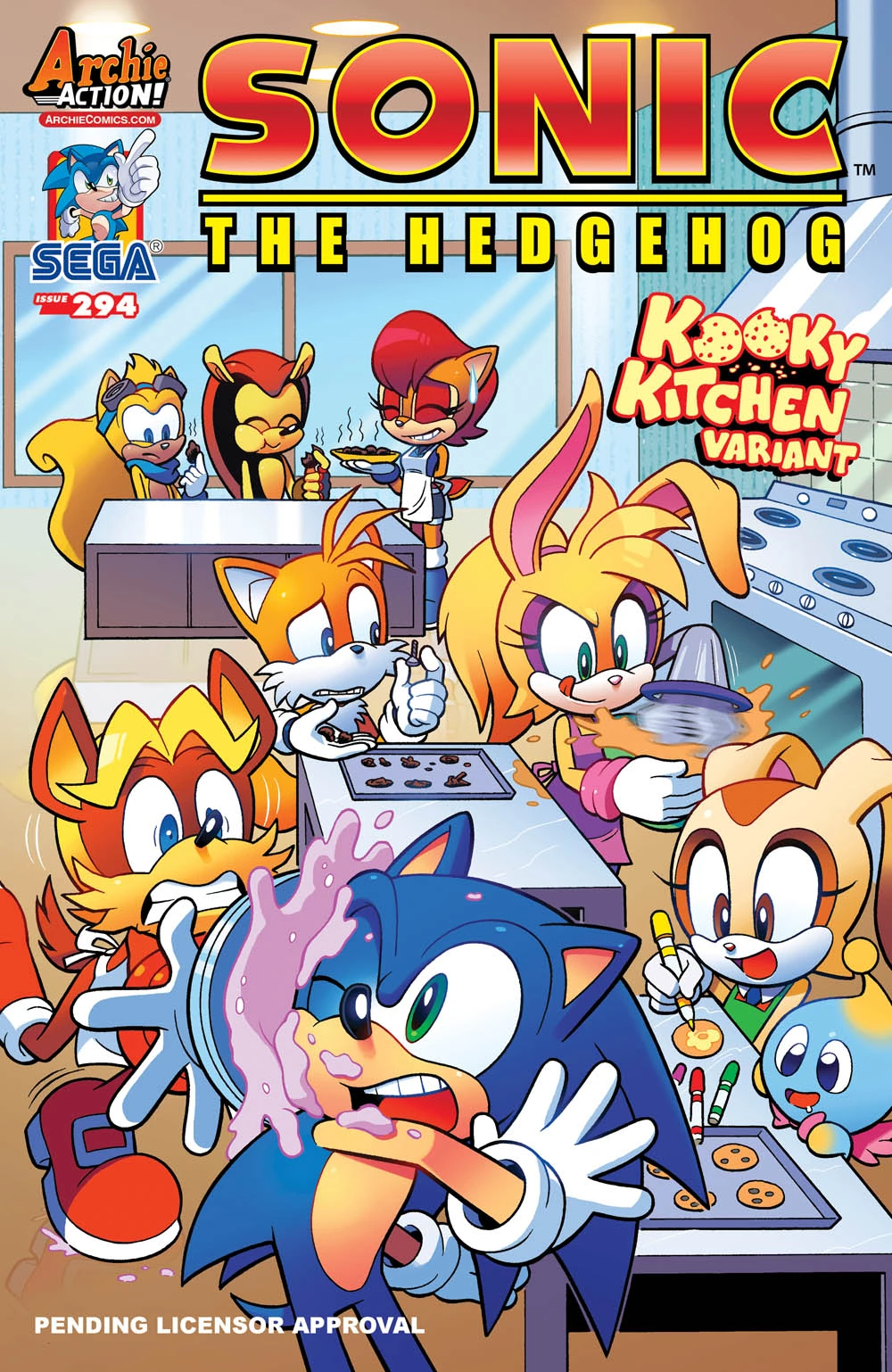
This issue was also going to include a back-up story called "Baking Bad." This would've been about Antoine and Bunnie having a cooking competition. (As far as I can tell, no artist was ever announced for this one and one might not have even been assigned at the time.) That sounds like an even goofier trifle, which might've been either a cute story full of flirty interaction between the married couple or a disheartening collection of lame attempts at jokes. It did prompt a variant cover from Jennifer Hernandez, which features not-so-great visual gags like Bunnie using her robot hand as a wisp and Antoine accidentally throwing a pie into Sonic's face.


Some wacky comic relief might've been what we needed after three years of globe-hoping adventure. But it seems like "Sonic Universe" would have been a much more interesting book in the first half of 2017. Issue 97 of "Sonic Universe" would have focused on the trio of Sally, Cream, and Amy. Some very rough preliminary sketches from Adam Bryce Thomas exist, giving us a vague notice of what the story might've involved. (Which is helpful, since the cover does nothing but have Sally, Cream, and Amy recreate the cover of "Sonic Jam.") It looks like "Sonic Universe" was returning to "Spark of Life" territory here, with Nicole being threatened by Phage again and Sally tracking Dr. Ellidy for help once more. The pages would've feature lots of dialogue, so it's extremely hard to know exactly what the plot was. The remains of a Titan Metal Sonic put in an appearance, along with an adorable panel of a reprogrammed Moto-Bug polishing a car of some sort.

While "Spark of Life" was quite good, I don't know how I feel about the comic returning to that well again so soon. I imagine the finished product probably would've been less similar than these sketches make it look. Especially since, I'm sure there would have been some sort of connecting fiber between the "Freedom Fighter" episodes. I'm glad Phage was returning, as she was definitely among the reboot's most promising villains. I'm really not sure what dynamic was left to explore between Sally and Dr. Elliday though. Hopefully, Aleah Baker was working on this story too, as I don't entirely trust Flynn to handle Sally and Nicole's relationship on his own.


Last among the unreleased Archie Sonic titles is the "Sonic: Mega Drive - Overdrive" one-shot, which probably would've come out before most of the stuff I've talked about above. Though no interior artwork for this comic has been released and Archie's solicitation doesn't tell us much, it's pretty easy to figure out what "Overdrive" would've entailed. Considering how committed to the "recreating a non-existent classic "Sonic" game" formula the first two parts of "Mega Drive" were, it's hard to imagine the conclusion would've shaken things up too much. As the cover indicates, this story would've been devoted to the Super Sonic, secret boss battle portion of the fan game that only exist in Flynn's head. So we can guess that Eggman would've used the Ancient Gear to activate some sort of superpowered weapon, that Sonic would've gotten a hold of the Chaos Emeralds somehow, transformed into his super form, and then curb-stomped Eggman's latest scheme into dust.

While that is a dramatic scenario, I'm betting this would have continued the "Mega Drive's" series mood of aggressively goofy comic relief. I don't see any reason for this version of Robotnik to stop acting like a total fool at this point, nor for Sonic and the gang to stop snarking at each at every turn. Once again, I'm sure Tyson Hesse's artwork would have been fantastic and the main reason to read this. I don't know, maybe Flynn would've really turned things around at the end. "The Next Level" was better than "Mega Drive," so maybe. But after being so disappointed with the first two installments, it's hard for me to get invested in what-might've-been with this particular comic book. While "Mega Drive" had a great premise – a retro Sonic adventure with art from Tyson Hesse! – the scripts really did not live up to that potential. And, also, why the hell was it advertised as a series of one-shots instead of just the mini-series it actually was?


Flynn's endgame with these issues is hard to guess. I suppose it's even possible, after three solid years devoted to an on-going arc, he was taking an intentional break from any sort of heavy plotting... But I'm pretty familiar with the dude's style, so I have no doubt he was already planning for the next big event. I’m sure Robotnik was plotting something, that the Naugus siblings, the various Egg Bosses, and the Deadly Six were all going to have roles to play in whatever was next.

Even if some of these issues look better than other, I do wish all these comics could’ve been published. Mostly because it would’ve been cool if the main “Sonic” book had made it to the 300 issues milestone and “Sonic Universe” to 100. Just for synchronicity, ya know? Anyway, this concludes my look at the Archie Sonic content that was planned but not released.